New beginning — gentle cancer treatment at CancerSA, Centurion, Pretoria

What If There Were a Gentler Way to Receive Chemotherapy?

You deserve a treatment that targets the cancer while aiming to preserve your quality of life. At CancerSA, we use the same proven medicines — but at a fraction of the dose, targeted directly into the cancer cells by insulin. Most of our patients keep their hair, their strength, and their lives.

Most patients keep their hair
Keep your energy
Keep living your life

This approach is part of integrative oncology, where treatments are selected based on individual patient needs and may be used alongside or in consideration of conventional medical care.

At a Glance

  • IPTLD uses the same chemotherapy drugs at a fraction of the dose — fewer side effects, no hospital stay
  • Personalised treatment: we test which drugs work best for YOUR cancer before starting
  • Full protocol runs 16–30 weeks (average 16–20), out-patient, 3–4 days per week
  • May be used for cancers where conventional chemo is recommended
  • Located in Centurion, Pretoria — serving patients from across Gauteng and South Africa. Call 072 444 9959

IPTLD (Insulin Potentiated Targeted Low Dose chemotherapy) is an integrative cancer treatment that uses the same chemotherapy medicines prescribed by conventional oncologists, but administered at approximately 10–15% of the standard dose. By using insulin to target cancer cells directly, IPTLD aims to deliver effective treatment with significantly fewer side effects — allowing most patients to continue their normal daily lives during therapy.

25+
Years Experience
Multiple
Cancer Types
Out-Patient
Treatment
Personalised
Protocols
On This Page

Quick Facts

Duration
16–30 weeks
Frequency
3–4 days / week
Setting
Out-patient — go home same day
Location
Centurion, Pretoria

You Were Diagnosed With Cancer. Then They Told You What Chemo Would Do to You.

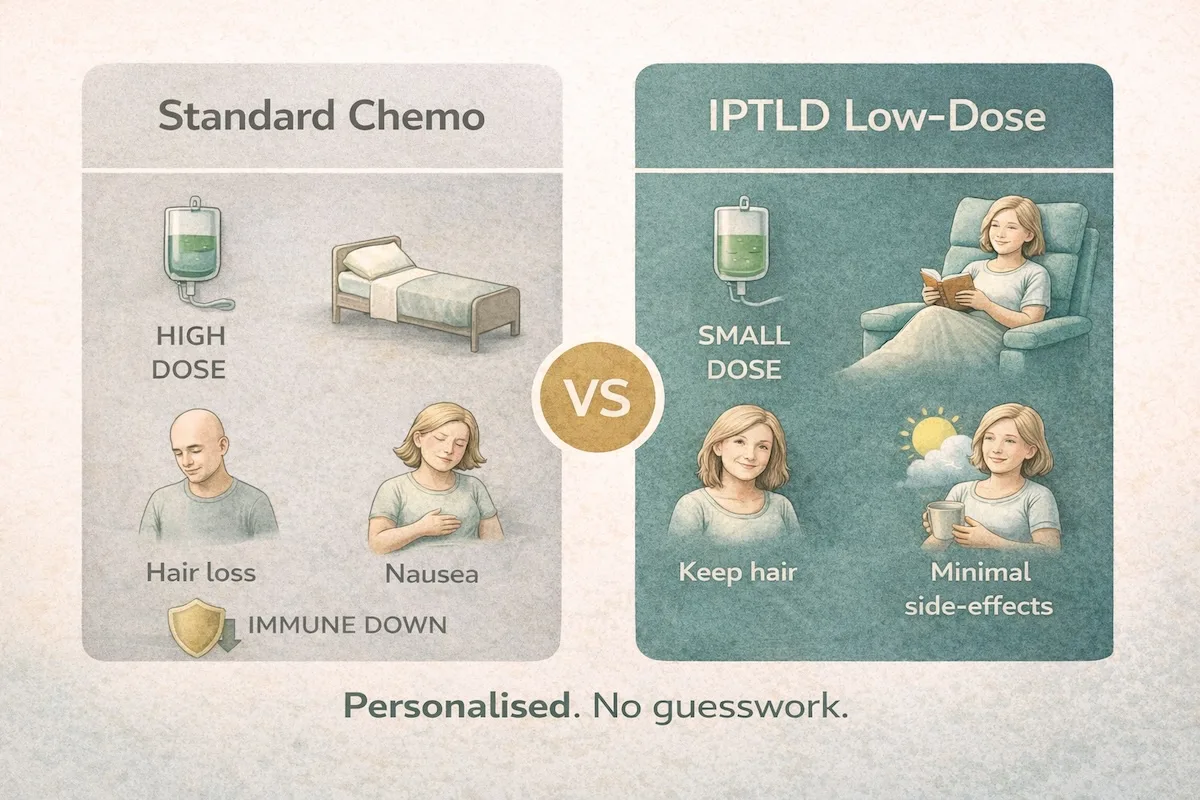
The hair loss. The nausea that makes eating difficult. The strain on your immune system — leaving you vulnerable to every infection. The fatigue so deep you cannot get out of bed for days. The feeling that the treatment is killing you faster than the cancer.

This is what conventional chemotherapy does. It uses the maximum dose your body can survive — and hopes enough poison reaches the cancer before it destroys everything else. Your hair follicles. Your gut lining. Your white blood cells. Your will to keep going.

What Is IPTLD and How Does It Work Differently?

That is exactly what IPTLD does.

How IPTLD low-dose chemotherapy works — 4-step process

Cancer cells have a weakness. They are addicted to sugar. They consume it at more than double the rate of healthy cells, and they grow extra doors on their surface — called insulin receptors — to let more in. Your cancer cells have up to 16 times more of these doors than your normal cells.

Your Cancer Is Unique. Your Treatment Should Be Too.

Here is an important fact about conventional oncology: there is currently no standard way to predict in advance which chemotherapy drugs will work for your specific cancer. They choose based on statistics — what works for most people. But you are not most people.

IPTLD low-dose chemotherapy compared to standard chemotherapy

Two patients with the exact same diagnosis can respond completely differently to the same drugs. One may respond well. The other may endure months of side effects from a drug that never had a chance of working for them.

What Your Week Looks Like During Treatment

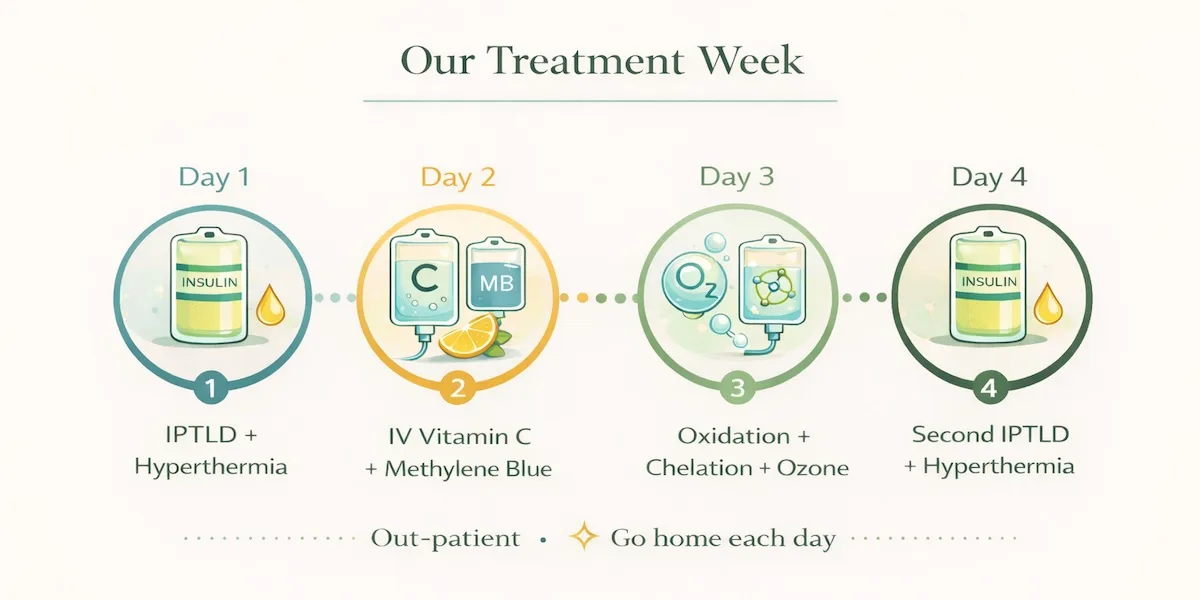
No two patients are the same, so no two protocols are identical. But here is what a typical treatment week looks like — and why each day matters.

CancerSA weekly cancer treatment protocol — 4 day plan
1

IPTLD Chemotherapy Under Hyperthermia

This is the core of your treatment. Insulin opens the cancer cell doors. Low-dose chemo goes in. Infrared heat makes the cancer cells even more vulnerable and stops them from repairing the damage. You sit in a comfortable chair for 2–3 hours. Most patients read, rest, or scroll their phones. Then you drive yourself home.

2

Detox and Immune Reset — IV H₂O₂, DMSO, Chelation, Ozone Sauna

Today is about clearing the battlefield. IV hydrogen peroxide floods your body with oxygen — an environment cancer cells cannot thrive in. DMSO carries the treatment deeper into your tissues. EDTA chelation removes the heavy metals that suppress your immune system and feed free radical damage. The ozone sauna detoxifies through your skin while stimulating your lymphatic system. You leave feeling lighter, cleaner, more energised.

3

Mega-Dose IV Vitamin C (± Methylene Blue) Under Hyperthermia

At the concentrations we achieve through IV, Vitamin C stops being a supplement and becomes a selective pro-oxidant agent designed to support the body while addressing cancer at a cellular level. It generates hydrogen peroxide inside cancer cells — which lack the enzyme to neutralise it. Healthy cells are protected. Insulin potentiation ensures the Vitamin C floods into cancer cells preferentially. Hyperthermia amplifies the effect. If your protocol includes IV Methylene Blue, it is given on the same day to support your mitochondria — the energy factories inside every cell.

4

Second IPTLD Session Under Hyperthermia (Phase 1 only)

During the first 6–8 weeks, you receive a second round of targeted chemotherapy. This keeps the pressure on the cancer while your body is still strong enough to handle it well. Once Dr Pretorius sees your cancer responding — through blood work, tumour markers, and how you feel — this day is dropped. You move to three days per week for the remaining months.

How Long Does Treatment Last?

Phase 1

4 days per week · 6–8 weeks

Intensive — hitting the cancer hard while you feel strong

Phase 2

3 days per week · 10–22 weeks

Maintenance — sustaining the pressure, monitoring your response

The average protocol is 16–20 weeks, but can extend to 30 weeks depending on your response. Every protocol is personalised — Dr Pretorius adjusts continuously based on your blood work, tumour markers, and how you are feeling.

Which Cancers Can We Treat?

The simple rule: if your oncologist has recommended chemotherapy, IPTLD can use the same drugs at a fraction of the dose. We only treat cancers where chemotherapy is a proven, standard part of treatment.

Listed from most chemo-responsive to least.

When standard treatment has failed: Even if your cancer has stopped responding to conventional chemotherapy or hormone therapy, chemo sensitivity testing can identify alternative agents that your specific cancer cells still respond to. This is particularly valuable for castration-resistant prostate cancer, platinum-resistant ovarian cancer, and any cancer where first-line treatment is no longer working.

Testicular Cancer
Lymphoma
Leukaemia
Ovarian Cancer
Breast Cancer
Lung Cancer
Colorectal Cancer
Bladder Cancer
Cervical Cancer
Stomach / Gastric Cancer
Head & Neck Cancer
Endometrial Cancer
Pancreatic Cancer
Prostate Cancer
Mesothelioma

Patient Outcomes — Case Studies

After my IPTLD treatments, my tumour markers dropped significantly. I could continue working throughout my treatment — something I never thought possible with chemotherapy.

Maria K.

Stage 3 Breast Cancer, Centurion

The CTC testing gave us clarity about which treatment would work best. It removed the guesswork and gave us confidence in the protocol. My cancer responded well.

Susan M.

Stage 4 Ovarian Cancer

I was told there was nothing more they could do. Dr Pretorius offered IPTLD and within weeks my blood work started improving. I am grateful every day. (Individual results vary)

Pieter D.

Stage 4 Lung Cancer, Pretoria

No hair loss, no nausea, no days spent in bed. I went for treatment in the morning and was back at the office after lunch. IPTLD gave me my life back during cancer treatment. (Individual results vary)

Linda R.

Breast Cancer, Johannesburg

My oncologist was sceptical, but the results spoke for themselves. My PSA levels dropped consistently throughout the IPTLD protocol. Dr Pretorius is thorough and caring.

Johan V.

Prostate Cancer, Centurion

Important: Private Treatment

All treatments at CancerSA are private and not covered by medical aid or insurance. We provide a clear, upfront cost breakdown at your first consultation so there are no surprises. Many patients find that the total cost of IPTLD treatment is significantly less than conventional chemotherapy with its associated hospital admissions, emergency visits, and ongoing medication for side effects. We are happy to discuss pricing openly — just ask.

What to Expect

Comfortable treatment room at CancerSA — patient relaxing during IV therapy

Treatment begins with an initial consultation where your medical history is reviewed in detail. A personalised plan is then developed based on your specific condition and goals.

Ongoing monitoring is carried out to assess response and adjust the approach as needed. Each patient's experience may differ depending on their overall health and treatment plan.

Frequently Asked Questions

IPTLD is not promoted as a cure for cancer. It is an integrative chemotherapy approach that uses insulin to target low-dose chemotherapy directly into cancer cells. Many patients experience significant tumour marker reduction, improved quality of life, and sustained remission. Results vary depending on cancer type, stage, and individual response. IPTLD is best understood as a gentler, more targeted way to deliver the same proven chemotherapy drugs — with fewer side effects and less damage to healthy tissue. Dr Pretorius monitors every patient closely and adjusts protocols based on measurable response.
Standard chemotherapy uses the maximum tolerable dose, which kills cancer cells but also damages healthy tissue — causing hair loss, nausea, immune suppression, and fatigue. IPTLD uses the same chemotherapy drugs but at only 10 to 15 percent of the standard dose. Insulin is given first to open cancer cell membranes, so the lower dose is absorbed preferentially by cancer cells. Healthy cells are largely spared. Most IPTLD patients keep their hair, maintain their energy, and continue working throughout treatment. The treatment is out-patient and takes 2 to 3 hours per session.
Most IPTLD patients do not lose their hair. Because IPTLD uses only 10 to 15 percent of the standard chemotherapy dose, hair follicles and other rapidly dividing healthy cells are largely spared. This is one of the most significant quality-of-life differences compared to conventional chemotherapy. While individual responses can vary depending on the specific drugs used and personal sensitivity, the majority of patients treated at CancerSA in Centurion retain their hair throughout the full treatment protocol. Many patients also avoid the severe nausea and fatigue associated with standard-dose chemotherapy.
IPTLD at CancerSA is private treatment and is not covered by medical aid or insurance. A full cost breakdown is provided at your first consultation so there are no surprises. Many patients find that the total cost of IPTLD is significantly less than conventional chemotherapy when you factor in hospital admissions, emergency visits, and ongoing medication for side effects. The protocol typically runs 16 to 20 weeks as an out-patient — no hospital stay is required. Contact CancerSA in Centurion on 072 444 9959 for a transparent discussion about pricing.
IPTLD can be used as an alternative to conventional chemotherapy for any cancer where chemotherapy is a recommended treatment. It uses the same approved chemotherapy drugs but delivers them at a fraction of the dose using insulin potentiation. Before treatment begins, chemo sensitivity testing identifies which specific drugs are most effective against your cancer cells. This is a personal medical decision that should be discussed with Dr Pretorius during a consultation. He will review your diagnosis, staging, and medical history to advise whether IPTLD is appropriate for your specific situation.
IPTLD is based on well-established science. Cancer cells have up to 16 times more insulin receptors than healthy cells — this is documented in peer-reviewed research. Insulin potentiation therapy has been used internationally for over 70 years. The chemotherapy drugs used in IPTLD are the same FDA-approved and SAHPRA-approved medicines used in conventional oncology. While large-scale randomised controlled trials specific to IPTLD are still emerging, the biological mechanism is well understood and supported by published clinical observations. Dr Pretorius monitors every patient with blood work and tumour markers to track measurable response.
Yes, IPTLD can be used alongside conventional oncology care in many cases. Some patients use IPTLD as their primary chemotherapy approach, while others combine it with conventional treatment under the guidance of both their oncologist and Dr Pretorius. The integrative protocol at CancerSA also includes IV Vitamin C, hyperthermia, bio-oxidative therapy, and chelation — all designed to support the body while addressing cancer at a cellular level. Open communication between your medical team is encouraged. Dr Pretorius is happy to coordinate with your oncologist to ensure your treatment plan is safe and complementary.

Important Information

All treatments are provided within an integrative care framework and are tailored to the individual. They are not intended to replace necessary conventional medical care where required. Patients are encouraged to discuss all treatment options with their healthcare providers.

Individual results vary. The information on this website is for educational purposes and does not constitute medical advice.

You May Also Be Interested In

Hope and perspective — CancerSA integrative cancer treatment

You Have Options. Let's Talk About Yours.

Our team will review your information and guide you on possible next steps based on your situation.

Call Now WhatsApp

Questions about treatment?

WhatsApp Dr Pretorius directly — he personally responds to every message as soon as he can, during clinic hours only (Mon–Fri, 08:00–14:00).

Start WhatsApp chat